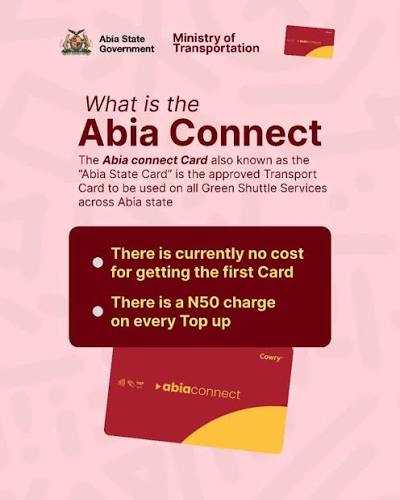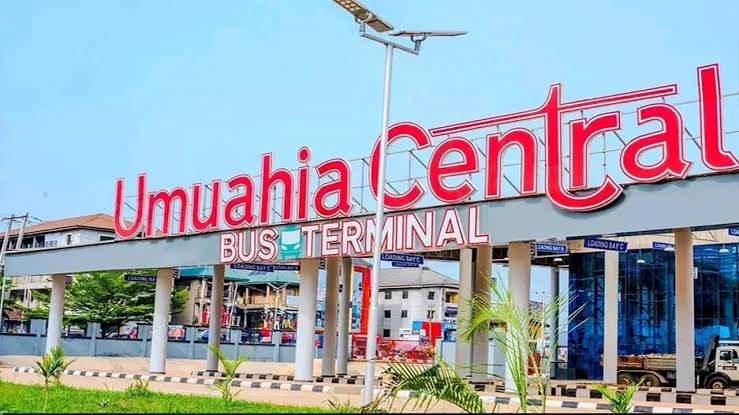
The newly commissioned Nnenna Oti Bus Terminal (originally known as the Umuahia Central Bus Terminal) is a state-of-the-art, centralized hub designed to consolidate all commercial motor parks in the state capital into a single, organized node. To use the terminal as a commuter, you simply register for an Abia State Social Security Identity Number (ABSSIN) online at abiapay.com, collect your free AbiaConnect smart card at the terminal kiosks, fund the card digitally, and scan it at the electronic ticketing gates to board your vehicle.
This multi-billion Naira project represents a massive shift from traditional, fragmented motor parks toward a unified multimodal transport system in the South-East region.
How to Use the Abia State Bus Terminal
The state government is operating a cashless, highly regulated entry and boarding system. Navigating the facility requires following a specific sequence to match up with the new digital ticketing protocols.
7 Core Talking Points of the Nnenna Oti Bus Terminal
The development of this infrastructure project highlights several key economic, technological, and political shifts within Abia State.
1. The Legacy Behind the Naming
Governor Alex Otti named the 340-capacity facility after Professor Nnenna Oti, the Vice-Chancellor of the Federal University of Technology Owerri (FUTO). She served as the Independent National Electoral Commission (INEC) Returning Officer for the 2023 Abia governorship election, and the terminal’s name honors her refusal to yield to political pressures during the collation process.
2. Pioneer State-Led Electric Vehicle Integration
The terminal serves as the central operational base for the Abia Green Shuttle fleet. Starting with an initial rollout of 20 zero-emission vehicles, the state’s electric vehicle fleet is scheduled to scale to 100 units before the end of the year. The vehicles feature onboard charging ports for passengers, steady cooling, and emergency safety features.
3. Future Inter-City Rail Connectivity
The terminal was placed specifically at the old site of the Umuahia urban market to facilitate multi-transit integration. The Ministry of Transport has finalized agreements with the Nigerian Railway Corporation to physically relocate the Umuahia train station closer to the bus terminal, enabling travelers to switch seamlessly between rail lines and road transit in one spot.
4. High-End Commercial and Passenger Amenities
Moving away from the uncomfortable conditions of traditional Nigerian motor parks, this facility is built like a modern airport terminal. The infrastructure includes:
-
62 heavy-duty air conditioning units spanning the passenger lounges.
-
More than 30 modern public conveniences and hygiene stations.
-
22 operational retail shops, food courts, and a restaurant.
-
An on-site motel and a fully furnished drivers’ lodge for late-night travelers.
5. Advanced Security and Automated Tracking
To combat the security vulnerabilities typical of informal transit zones, the terminal is entirely enclosed and monitored by closed-circuit television (CCTV) arrays. The smart ticketing backend registers every passenger who taps into the network, creating an ironclad digital manifest that helps authorities monitor safety and route efficiency in real time.
6. Decongestion of the Capital City
Prior to enforcement, Umuahia suffered from severe traffic gridlock caused by private transport companies operating illegal, scattered loading points along major roadsides. The state government is actively enforcing a phased, mandatory relocation policy, moving all formal and informal transport unions directly into the terminal boundaries to clear up urban congestion.
7. Merit-Based, Union-Neutral Loading
To prevent the internal extortion and favoritism common within local transport unions, loading opportunities at the terminal are strictly automated on a first-come, first-served basis. Operators are assigned reflective identification tags upon entry, and vehicles move out based on arrival time, ensuring a level playing field for independent drivers and large transport guilds alike.